
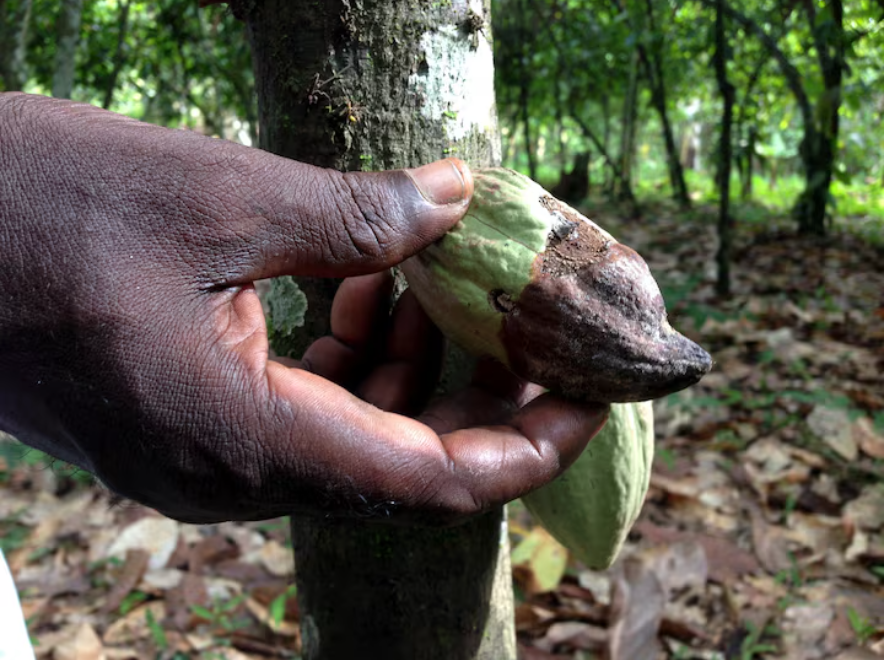
Cameroon’s agricultural sector is at a critical turning point in 2025. Two trends are colliding: a severe outbreak of Black Pod disease in cocoa farms, especially in the Southwest region, and a surge in innovative projects and government reforms aimed at increasing resilience and boosting production.
Black Pod Disease: The Urgent Crisis
- Location & Severity: Since July 2025, intense rains in cocoa-producing hubs like Muyuka, Mbonge, and Kumba have created ideal conditions for Black Pod disease (caused by Phytophthora megakarya). The disease is devastating pods, with infection rates reported around 65-70% in some districts.
- Agricultural Practices & Inputs: The crisis is worsened by poor farming practices—delayed pruning, irregular spraying, weak field sanitation. Adding to that, many farmers are using counterfeit or low-quality fungicides, smuggled from neighboring countries, which do not effectively control the disease.
- Economic & Social Impacts: Yields are strongly down. Many farmers are financially strained—difficulty repaying loans, feeding families, and preparing for the new school year. This threatens livelihoods and food security.
Solutions & Innovations: What’s Being Done
Amid the crisis, Cameroon is not standing still. Multiple innovations and policy shifts are emerging:
- Agricultural Innovation Projects
- The i4Ag-AIRCoA project is supporting small cotton farmers by promoting climate-resilient practices: use of biochar enriched with organic amendments (Bokashi, Jeevamrit), training of extension agents, and demonstration plots.
- RADiUS Cameroon, via the JERSIC conference, has identified agroecological innovations like biofertilizers from plant extracts, black soldier fly waste bioconversion, use of Rhizobium & mycorrhizae, and other organic inputs. These help reduce dependency on chemical inputs and improve sustainability.
- Government Reforms & Investments
- The state has drastically lowered fees for agricultural companies by ~92% on royalties related to public domain use, intending to reduce cost burdens and encourage investment.
- Huge funding (~US$85 million) has been ratified for agricultural expansion, especially in Adamaoua, for hydraulic infrastructure, road networks, agro-processing and value addition. Goal: expand arable land and increase output in the coming years.
- Logistic capacity for phytosanitary control has been bolstered: motorcycles and pickup trucks donated to the Ministry of Agriculture to improve field inspections and regulation.
- Agroforestry & Gender-Inclusive Land Use
A women-led agroforestry initiative (“Lilagle”) is helping secure land for women, planting tens of thousands of fruit trees, balancing environmental restoration, income generation, and shifting land ownership norms.
Why This Matters
- Food Security & Exports: Cocoa is a major export crop and source of income. The disease threatens both income of smallholders and Cameroon’s export revenues.
- Sustainability: Over-reliance on chemicals (especially counterfeit inputs) harms soil, environment and long-term productivity. Organic and agroecological methods offer healthier alternatives.
- Resilience to Climate: More frequent heavy rains, flooding and weather extremes make disease control harder. Innovations like drought- or rain-resilient cropping, better infrastructure, and agroforestry are essential.
- Gender & Equity: Empowering women farmers, improving access to land, credits or inputs helps ensure broader social impact and fairer growth.
What Should Be Done Next
- Rapid scale up of early warning systems for fungal outbreaks and weather forecasting to allow timely interventions.
- Enforcement against counterfeit agrochemical supply, plus easier access to genuine quality inputs.
- Expanded extension services and training for farmers in best practices (pruning, sanitation, spraying, using resistant varieties).
- Scaling up agroecology, organic inputs and diversified cropping to reduce dependency on single-crop systems.
- Supporting women’s land rights and involvement in agricultural leadership.
Leave a Reply